SOUTH AFRICAN NON-PROFIT ORGANISATION · NPO 304-987Building possibility, together

The case for support

A global challenge.
A South African response.

Women’s safety, economic opportunity and ability to lead are connected. Nkwenkwezi Foundation invites donors worldwide to support community-led pathways that help women shape their own futures.

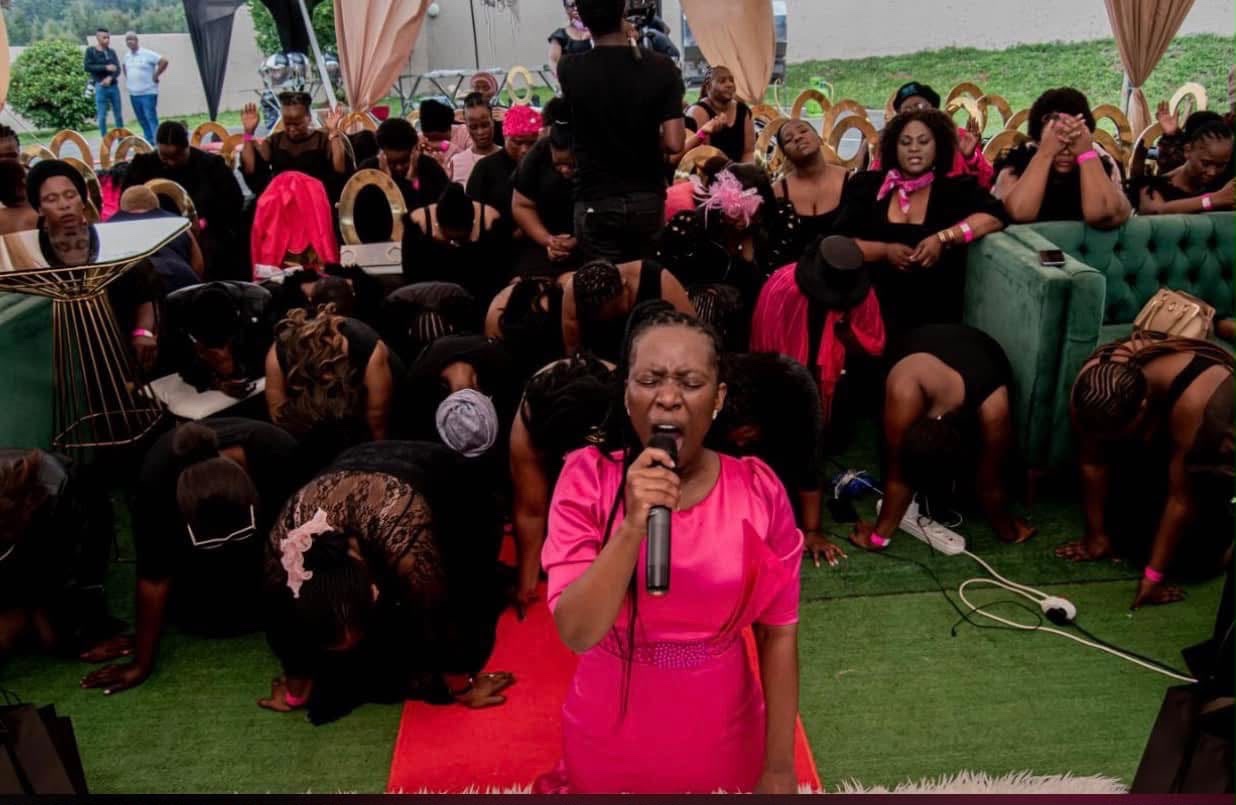
Women at a Nkwenkwezi Foundation gathering
Women at the heart of community life.

The South African context

Opportunity must include
safety, voice and choice.

National research shows the scale of violence and economic exclusion facing women. These figures describe the wider need, not the Foundation’s beneficiaries or results.

37.5%

Women’s official unemployment rate

Among women aged 15–64 in South Africa’s labour force in Q2 2026. Approximately 4.4 million women were officially unemployed.

Statistics South Africa · QLFS, Q2 2026

Unemployment is measured as a share of the labour force, not all women. Violence prevalence describes lifetime experience, not incidents in a single year.

A shared global concern

Different places.
Connected barriers.

Violence and unequal care responsibilities limit women’s choices across the world. Global solidarity can support responses shaped by local knowledge.

These estimates cover different populations and measures. They should not be added together or read as directly comparable with the South African findings.

Our contribution

Put women’s agency
at the centre.

Our role is to connect community relationships, learning and practical opportunity in South Africa.

Established in 2022, Nkwenkwezi Foundation brings together women’s empowerment and six connected programme areas. The Women’s Lounge Conference has provided an annual space for connection, leadership and wellbeing over three consecutive years.

Explore our annual women’s platform

A connected response

  • Women’s leadership, mentoring, rights awareness and peer connection.
  • Financial capability, enterprise readiness and livelihood pathways.
  • Girls’ development, youth opportunity and family engagement.
  • Child-centred awareness, protection linkages and cultural belonging.

Programme delivery depends on the location, partners, resources and capacity agreed for each activity. This is community development work, not a claim to provide nationwide crisis, shelter, clinical or legal services.

See our women’s empowerment focus

What your support could enable

Fund the work.
Strengthen the ability to deliver.

These are priorities for proposal development. Costs, locations, participant numbers and outcome targets will be set in an agreed programme budget.

Leadership & connection

Women’s learning and mentoring

Discuss facilitation, learning materials, mentoring and convening costs for leadership and personal-development activities.

Possible evidence: attendance, participant feedback and agreed learning measures.

Economic participation

Skills and enterprise readiness

Explore practical skills, financial-capability learning, enterprise preparation and appropriate connections to opportunities.

Possible evidence: completion, skills assessment and follow-up on relevant opportunities.

Access & participation

Reduce barriers to taking part

Assess transport, accessibility, suitable scheduling and care-related participation barriers when designing a programme.

Possible evidence: barriers identified, agreed support provided and participation retained.

Responsible delivery

People, safeguards and evidence

Include appropriate coordination, safeguarding, finance, monitoring and reporting costs in programme design.

Possible evidence: delivery milestones, budget reporting and agreed safeguarding checks.

A specific donation-to-outcome price, annual funding target and beneficiary target will be published only after a costed delivery plan is confirmed. National need is not used as a claim about the Foundation’s current reach.
From solidarity to partnership

Bring global support
closer to local priorities.

We welcome South African supporters, diaspora communities, corporate teams and international grantmakers who share a commitment to women’s dignity and opportunity.

Start with the programme need, review the organisation’s information, and agree a proportionate plan for funding and reporting. Your contribution can support a defined activity or the organisational capacity needed to deliver it responsibly.

Sources & definitions

Evidence you can follow.

Sources reviewed on 29 September 2026. The study and reference periods are shown with each statistic. Figures are rounded where indicated; all are external research findings.

  • HSRC · National GBV Study, 2022 · published 2024 (PDF)

    The First South African National Gender-Based Violence Study, 2022, executive summary, pp. 6–7. The 35.5% estimate covers lifetime physical and/or sexual violence among adult women, regardless of partnered status. Its 95% confidence interval is 33.2%–37.9%.

  • Statistics South Africa · QLFS, Q2 2026

    Quarter 2 of 2026. The official female unemployment rate uses the female labour force aged 15–64 as its denominator. It excludes women outside the labour force.

  • WHO & UN partners · 2023 estimates, released November 2025

    The 2025 release presents 2023 global prevalence estimates. The lifetime estimate covers intimate-partner physical/sexual violence and non-partner sexual violence; it is not a measure of all forms of abuse.

  • ILO · 2023 estimates, published October 2024

    The 2024 publication reports estimates for 2023 using data from 125 countries. Being outside the labour force due to care responsibilities is distinct from official unemployment.

Citing these institutions does not imply their endorsement of, funding for, or partnership with Nkwenkwezi Foundation.

Agriculture & sustainable development

Grow enterprises.
Create opportunity.

Help women build agricultural skills, use appropriate technology and develop viable enterprises with routes to markets and paid work.

We welcome partners to shape feasible projects in sustainable production, processing and agricultural services, with budgets and outcomes agreed before delivery.

Explore agribusiness partnerships

A South African purpose

Women’s progress.
Our shared future.

Our programme priorities connect with national ambitions for less poverty, greater equality and an inclusive economy.

Read South Africa’s National Development Plan 2030
01

Economic participation

Skills, women-led enterprise and pathways to decent work.

02

Rural opportunity

Agricultural capability, viable markets and responsible resource use.

03

Equality and belonging

Women’s leadership, young people’s development and connected communities.

This is the Foundation’s interpretation of how its priorities relate to the NDP. It does not indicate government accreditation, funding or endorsement.